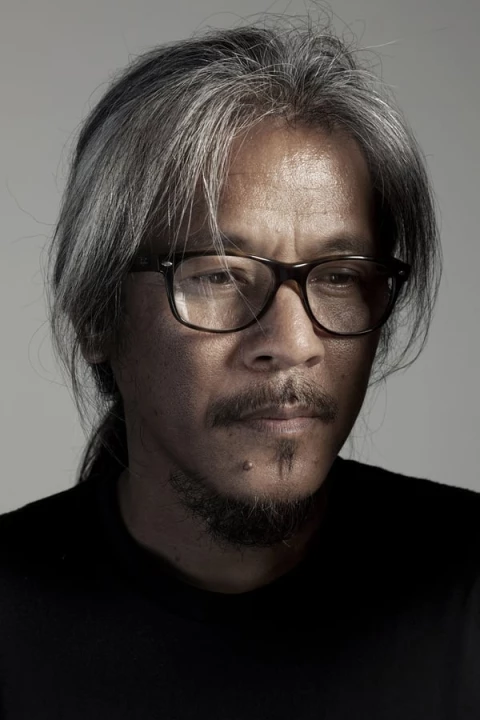
This story was originally in Metropolis M, written by Jinxiao Zhou. You can read the original article here.
Under the dreamy and surreal red and blue colors of a Wadi Rum desert, twenty artists form a circle on the sand. We have traveled from across the world to Jordan, drawn by a unique invitation: to spend twenty-one days together, ten of them deep in the desert, to see what creative refuge this stark landscape might offer.
The residency, titled Remal Lab—remal meaning “sand” in Arabic—was organized by Studio 8, which is an independent arts organization based in Amman, Jordan, that fosters interdisciplinary collaboration and experimental art practices centered around performance. Remal Lab was generously supported by the Prince Claus Fund as part of its 2024 Fertile Ground project.
Our residency began in Amman, where we gathered for six days at MMAG Foundation, a contemporary art institute in the city. After our time in the desert, we returned there again for the final five days and our closing exhibition. For this article, I mailed three of the artists from the group to look back on their experiences and reflect on our experiences in the desert: Sadiq Al-Harasi (he/him), a cultural practitioner, artist, and storyteller from Yemen; Adrián Aroko (he/him), a Mexican sound and visual artist whose practice bridges environmental advocacy and technical experimentation; and Nawal Maghathe (they/them), a Palestinian-American multidisciplinary artist and curator based in Cincinnati, Ohio, whose practice spans performance, installation, and community engagement.

Sadiq Al-Harasi in his photographs tries to look for the connections between rural and urban life, people, animals, and the land, presenting images of Yemen that are not typically portrayed in journalism.
Adrián Aroko addresses human rights, environmental degradation, and multispecies well-being through recycled materials, electronic sensors, circuitry, and archival research.
Nawal Maghathe is a Palestinian-American multidisciplinary artist and curator based in Cincinnati, Ohio, whose practice spans performance, installation, and community engagement . Nawal Maghathe is working with photographs printed on fabric, and beeswax sculptures. In their multidisciplinary practice, Maghathe creates immersive installations that explore themes of healing, memory, and cultural identity.
Expectations vs. Reality: The Desert as Both Shelter and Disruption
Before arriving in Wadi Rum, each artist brought with them their own hopes and preconceptions. For me, I carried a quiet, unspoken grief – born from the losses I experienced during the pandemic, and from years of migration and constant movement between cities and countries. It felt like an undercurrent, mirroring the land itself: Jordan, a country shaped by the weight of war and displacement.
After our first day of sharing plans, I noticed several artists—particularly those of Palestinian background now living in the U.S., Jordan, and the UAE—were drawn to working with the theme of grief. In response, I proposed a collective grief ritual: to write down our grief and burn the papers in the desert.
I believed the desert could offer us a kind of refuge—a space to release what had become too heavy to carry alone.


The Yemeni photographer and artist Sadiq Al-Harasi spoke with refreshing honesty about what drew him to the residency: a longing for pause. “I would love to spend ten days in the desert, away from modern life and technology. Being in the desert for that long was a new experience, and it drove me to apply,” he said. Over the course of a month together, I came to see Sadiq as a generous, nurturing presence—someone who often looked out for others in the group.
Adrián Aroko, a multidisciplinary artist from Mexico, joined with a mix of curiosity and hesitation. “I didn’t know anything about that part of the world—maybe everyone has some prejudice about it, especially in these times of war. My close friends thought it would be dangerous to go, even though Mexico can also be very dangerous,” he shared. For him, the residency was an opportunity to move beyond media narratives and form his own, more direct understanding.
Nawal Maghathe arrived with more personal hopes. They turned to the desert as a space to process grief and reconnect with their creative core. “Although my work didn’t turn out performative through the program, that was a big driving factor—I wanted to reconnect with my performance-based practice,” they reflected. Their intentions were loosely held—grief, movement, presence—but they trusted the desert would offer its own kind of clarity.
When we finally arrived at the base camp in Wadi Rum, the terrain began to reshape our original intentions. Adrián described how his worries seemed to fall away:
“In the desert, there was nothing to worry about. It felt safe, like a shelter. We ate the same food every day. I was free to think my own thoughts and sit with everyone.”
The desert’s stark minimalism proved unexpectedly soothing.
For Nawal, however, the experience was more confronting—and less conducive to the kind of reflection they had hoped for. “My plan was to sit and allow grief to come… but that was harder than I thought. I had a really hard time,” they admitted. “The desert was very beautiful, but also difficult for me to navigate… especially being in a space surrounded by strangers.” The silence didn’t only create space for reflection—it also surfaced what’s often buried beneath the noise of everyday life.

Sadiq, who had imagined the desert would offer opportunities to find some peace, experienced a deeper emotional shift. “It was a space for me to breathe, to think, to cry. I really felt connected to do everything together with you,” he says. The desert removed layers of noise and created space for shared reflection. “It brought me a sense of community I had not expected that way.”
The desert, in its brutal simplicity, gave us something many of us hadn’t felt in a long time: presence.
Some of the twenty artists arrived expecting to produce work every day—but the heat, the vastness, and the raw environment asked something different of us. From the beginning, the core curators — Ren Xiaoman and Hadi Abd Al Hadi Abunahleh — reminded us that this residency wasn’t centered on artistic output. It was about creating a space for connection: to pay deep attention, to listen, and to slow down. In many ways, it was a deliberate disruption from our regular lives. The desert revealed itself as a truly transformative space—but not immediately.
On our first day in Wadi Rum, we even turned two shared rest tents into a makeshift studio—but few of us lingered there for long.
Contamination: Artistic Exchange and Cross-Pollination
The theme of contamination—introduced by guest curator Jennifer McColl Crozier—became a guiding lens for our time together. It suggested an organic mode of exchange. In our tented camp, we shared more than space: we exchanged techniques, stories, grief, and meals. A kind of slow, artistic cross-pollination began to take root.

Walking quickly became our primary way of engaging with the desert and with one another. Most mornings, before the heat became unbearable, we set out on scouting expeditions across the sands. Some gathered raw materials: Adrián used desert sand itself as an instrument, recording its shifting textures for his installation. Nawal, walking intuitively, collected small rocks to bring back to the studio—later weaving them into a contemplative installation that felt deeply therapeutic, both for them and those who experienced it. Others wandered in search of a quiet cave carved into the red rock—a refuge for reading and reflection. Some hunted for striking backdrops: vast dunes, rusted metal, or abandoned structures that could serve as sets for film or performance. Sadiq discovered an old desert camp, which he repurposed as the scenography for one of his video shoots. I found a large, semi-sheltered grotto—an ideal setting for our collective grief ritual.

“Knowing we would have 20 days together, separated from everyday life, allowed us to be more vulnerable with each other,” Nawal said. “It created such a deep connection that it was really painful when I left.”
The whole situation inspired Adrian to start a collaborative practice after years of primarily working alone. “I was very happy to feel that I had a community where we could listen to and who were supportive of each other. I decided to bring that into my artwork too.” Sadiq also felt this shift. “Everyone was supportive and everyone was helping each other.” He had expected isolation, but instead found dialogue. His conversations with other artists opened doors in his own work, especially when discussing how to present his photos and videos.
“The main thing we want as Yemenis is a safe space to talk, to connect, and to express ourselves freely without limitations or judgment,” he added later. “Here it was.”
The group’s openness also blurred the lines between each other’s disciplines. A PhD researcher became a lino printmaker. People stepped into each other’s work—offering their bodies as models for video performances, contributing their voices and languages to sound installations. Materials passed freely between hands: glue, fabric, field recorders, shared without question. The ideas flowed effortlessly. A single question about a process could send someone’s project into a new possibility.
Transformation: After the Desert
Sadiq arrived full of emotion back in Amman, already dreaming of future collaborations. “After the residency, I felt I didn’t need to leave [Yemen] to be able to work – I just felt different. It felt like I could do something, and mean something.” He returned to Yemen determined to create a version of this safe, expressive art space.
Nawal, juggling curating and their own art practice, realized they wanted to recommit to the latter. “Being away from daily life stressors allowed me to look at myself and my needs and wants in a different way. It brought a bit of clarity,” they said. “I also intentionally wanted to focus more on my art practice, deeper, which I really value.”


Adrian had a more socio-political reflection. He spoke about how his understanding of Jordan had shifted. The desert changed his thinking — about the region, about collaboration, about himself. He talked about trying to bring parts of that spirit home. And although real life in Mexico City quickly took over, the intention remained. The sense that art could foster community, not just product, stayed not only with him, but with all of us who were there.
Many of us also experienced a shift in our relationship to time. We moved from urgency to process, and we returned to our cities with a different clock inside us. A slower clock, perhaps, but a more attuned one. Some of us spoke about resisting the “return to normal,” finding ways to protect that desert pace even inside busy urban lives. We wanted to carry something of Wadi Rum into our studios and kitchens and friendships. That, too, was part of the transformation.
As for me — I also left the desert with clarity. I realized how much I had missed simply sitting with others, creating without pressure, and listening without interruption. I learned that shelter isn’t always comfortable. Sometimes it’s windy, dusty, and unfamiliar. But when people commit to sharing time and presence, even the most remote place can feel like home.