A story by Gabriel PINTO
Afro-descendant heritage, while carrying historical experiences of displacement and marginalization, offers a unique cosmogony and perspective of the world, both present and future. In Venezuela, photographer and cultural researcher Gabriel Pinto places ancestral memory and questions of identity at the centre of his artistic practice, which asserts the political and representational power of art.
Gabriel is a 2024 Seed Awardee, supported by the Ing Yoe Tan Fund—a legacy Fund named after the late Ing Yoe Tan, a member of parliament and supporter of women’s rights, who strongly believed in culture and diversity. Following the same principles, Gabriel uses photography, sound, and visual arts to explore Afro-Venezuelan identity, highlighting both the challenges and the strength of these communities.
Talking about places as entanglements of physical space, memory, and culture, Gabriel uses art as a method to challenge hierarchical positions, transforming vulnerability into a way of exploring personal and political stories. In this interview, he reflects on his artistic practice in conversation with Marianna Stefanitsi.
Could you introduce yourself, your practice, and a bit about the context you live and create in?
My name is Gabriel Pinto, and my existence is a relentless search for reunion. I define myself as a photographer and cultural researcher whose practice is, above all, an exercise in self-recognition in the search between ancestral heritage and the present.
My work, through photography and research, is the manifestation of a great need for healing and the answer to one important question: Who am I?
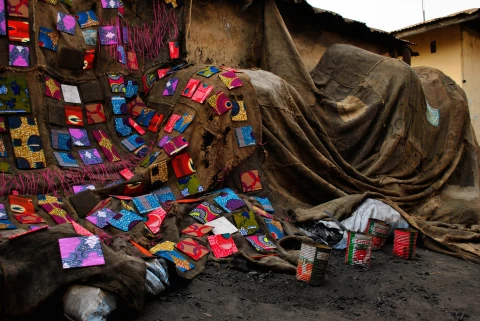
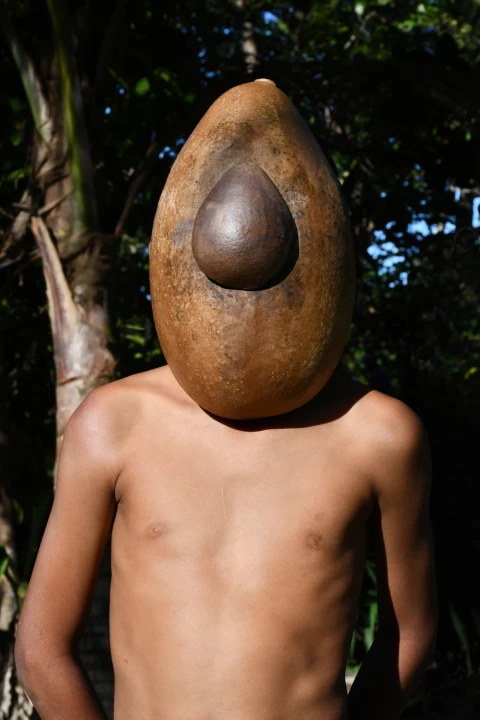
By centring my work on the rituals, faces, and landscapes of my community, I perform an individual and collective reparation. I seek to take down the imposed Eurocentric gaze and put on an Afro-centric one. Each image was produced through research. My practice is fed by oral tradition and cultural richness from the territory. Photography is tangible proof that knowledge of African heritage in Venezuela is a valid epistemology to study, honour, and teach.
I understand territory as the place where I feel represented, not a geographical space, but a vessel of resistance and pain, joy and creation. My job is to decipher the codes, changing them into future memory.
My Afro-Venezuelan heritage, for those who do not know, is the foundation of my identity, which has been built through the history of my family and of many communities in Venezuela. Being Afro-Venezuelan is being heir to a history, to great cultural patrimony that deserves to be told and built hand in hand with our ancestors and new generations.
Being Afro-Venezuelan anchors us to the place where resistance became struggle, and the territory is proof that culture can be re-existed and re-created despite the system.
It is the core of my self-knowledge: the tradition, knowledge, and values that my family has given me. All of this knowledge and wisdom involves not duty but spiritual necessity in understanding my place in the universe and the responsibility I have with those who will come after me. It is the means whereby I reaffirm my presence in this territory, heal historical ruptures, and project a future where our Afro-Venezuelan heritage will be recognized.
I consider art to be a tool for social transformation. It is at that point that my responsibility expands beyond passive preservation to active communication of the legacy. I believe that through communicating part of the cultural legacy of which I am a part and which represents where I come from, I have reopened the dialogue concerning identity, belonging, and the intrinsic value of our traditions.
Preserving this heritage is a form of recognition and gratitude to my ancestors and to the place that has shaped me. This is one way to honour my family's legacy and that of the Afro-Venezuelan peoples. It reminds us that we are part of a vaster and constantly unfolding history, which is an essential building block of our own story.
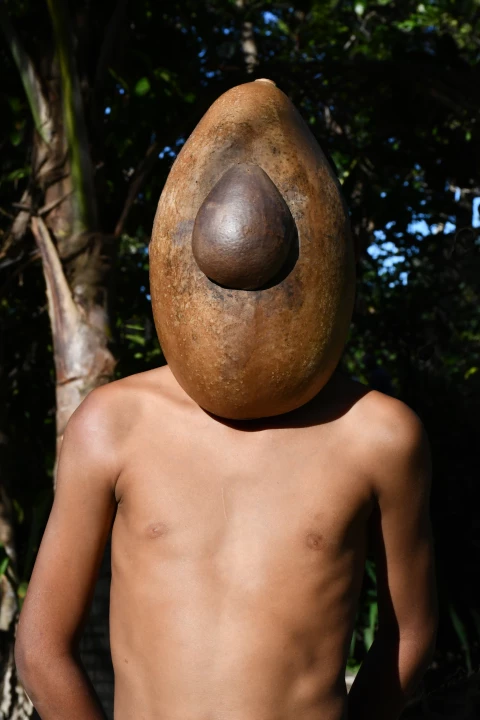
How do you see your work carrying a responsibility to preserve cultural legacy, and why is that important to you?
Through photography, my work becomes a visual archive. Not only do I record the tangible elements (rituals, stories, traditions) of my culture and family heritage, but I also want to add a new layer of meaning over time, ensuring that future generations have access to the collective memory and identity of our place of origin.
I consider art to be a tool for social transformation. This is where my responsibility expands from passive preservation to active communication of heritage. By communicating part of the cultural heritage that belongs to me and represents where I come from, I have reactivated the dialogue about identity, belonging, and the intrinsic value of our traditions.
Preserving this legacy is an act of recognition and gratitude towards my ancestors and the place that has shaped me. It is a way of honouring my family legacy and that of the Afro-Venezuelan peoples. It is a reminder that we are part of a larger and ongoing history, which is fundamental to the construction of our own history.
What does it mean to work as an artist in Venezuela today?
Working as an artist in Venezuela today means taking on the role of activist.
It means using art as a tool for historical reparation in a country where African heritage has been structurally invisible. My practice is a counter-narrative. I focus on decolonising the Venezuelan gaze by centring the lives and culture of Afro-descendant communities. It is a commitment to the reaffirmation of territories and representations.

How does your work engage with your local community, and what role do these relationships play in your practice?
I seek to create a dialogue in the image of those who have historically been the object of study. The images are an archive of resistance generated from belonging, ensuring that Afrocentric dignity, cosmogony, and self-determination are the only means through which our culture is interpreted.
You have mentioned that you have a bond with everyone you photograph. Could you tell us more about your connection to the photographic medium and how it helps you express what you want to convey?
My connection with photography is deeply spiritual and ancestral. The medium is the vehicle that translates the oral legacy of African heritage into a lasting visual form. I use photography to consecrate and to honour.
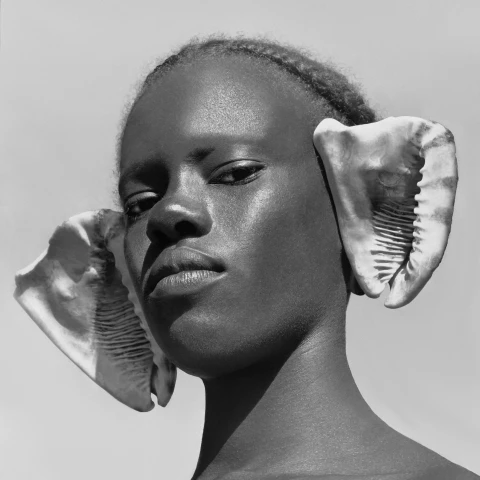
The framing, lighting, and composition are deliberate acts of aesthetic vindication, designed to disrupt visual patterns of victimisation or exoticism.
I want my images to radiate the strength of Africanity in Venezuela, transmitting the wisdom of the elders and the culture, and granting tradition the visual majesty that has historically been denied to it within Eurocentric canons.


How has the support of the Seed Award helped you navigate your context? What has been the most meaningful aspect of this Award for you?
The support of the Seed Award has been a strategic ally for the political and cultural impact of my project. In a context where access to resources and platforms is severely limited, the award functions as a resource of sovereignty that allows me to work with autonomy and curatorial freedom. It has expanded my capacity to carry out the field documentation necessary to protect cultural codes at risk.
Seed Award has served as an institutional megaphone allowing Afro-Venezuelan demands and narratives to resonate in spaces of global artistic power.
The support of the Seed Award has also contributed to the integration of a research project in the Barlovento region of Venezuela for the preservation of traditional Afro-Venezuelan music
The most significant aspect is the validation of Afro-centred cultural activism as a first-rate artistic practice. This recognition is a victory for the visibility of African heritage in Venezuela.
It not only validates my personal work, but also legitimises the existence and value of my communities' struggles. It is a powerful sign that the historical truth and richness of African cosmogony in our country deserve and should occupy centre stage in the cultural and academic world.

If your work could speak to future generations, what would it say to them?
Your identity is the key to knowledge, not a burden.
Do not let anyone steal your codes. Be activists of your own history, because preserving your legacy is a necessary act.