A story by Dale BERNING SAWA
This is an edited version of the article by Dale Berning Sawa, originally published on theguardian.com and in Guardian Saturday magazine, under the headline, "South African photographer Zanele Muholi: ‘My mother worked for a white family. I remember the pools I wasn’t allowed to swim in’". You can read the original article here. Courtesy of Guardian News & Media Ltd.
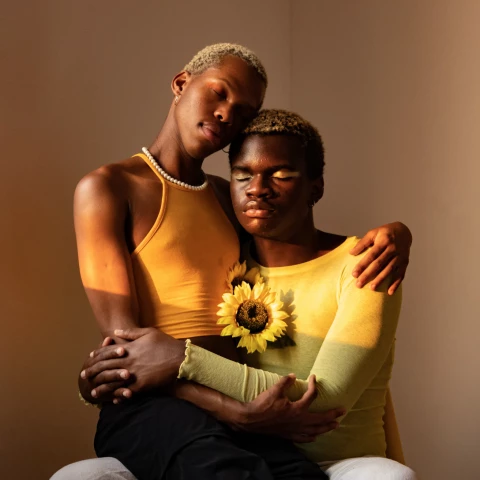
South African visual activist and 2013 Prince Claus Awardee Zanele Muholi has spent nearly three decades changing the face of African art. Working for and with Black LGBTQIA+ communities, their photography affirms dignity, beauty and belonging.

Born in one of the bloodiest moments of apartheid, Muholi’s early life continues to shape their work. Where lazy or unthinking descriptions will often land on “poor” to qualify a background such as Muholi’s, the artist purposefully chooses “under-resourced” instead, underscoring the systemic inequalities at work. They also emphasise what they have gained at every stage: a DIY urgency – a sense of responsibility – to keep making work, driven by the certitude that it really can change lives.
As a child Muholi was cared for by aunties and neighbours, and the wider township community. This sense of belonging to a chosen family is itself expanded throughout their work. In Faces and Phases, their long-running portrait series documenting professionals and experts who play crucial roles in the queer community.


“I always ask people to look good,” they say, “because most images that were done previously by visual anthropologists, they really distorted Africa. You often find that the photographer’s name is there but the person being photographed, their name is not there. I’m trying to fix that and make sure that we are done beautifully in the most amazing way.”
In 2007, Muholi shot a series of portraits of Miss D’Vine, a dancer who worked in the gay bars and drag houses of Johannesburg. Shooting outdoors, using the landscape, was about “undoing the closet” and allowing the subject to be seen. In one image, the dancer wears a beaded isigege, a Zulu maiden’s skirt traditionally worn by young girls during the Reed Dance, when they dance for the Zulu king. “Trans people have not been able to be part of those ceremonies because they are either pre-op, and therefore they don’t qualify, or if they do go there, they might be seen as something else that they do not connect with.”

In Somnyama Ngonyama, a series of self-portraits largely inspired by Muholi’s mother, the artist poses in bold attire: a headdress of a dozen combs or two-dozen wooden clothes pegs; a headwrap and neckpiece made of deflated bike tires. The images questions conventions of beauty and fashion:
“What is beauty to you might not be the same to the next person. What is fashion in the west might be ritual to us, or part of the culture and traditions of the Bantu people.”
The series’ title means “Hail the Dark Lioness” in isiZulu. This is political, as photography is often held to be a western thing. “But when we think, when we plan, when we produce, when we play our music, it is in Zulu – or whatever your native language is.”
Recently recognised with the 2026 Hasselblad Award, Muholi has said the honour is for “all of us, the queer and trans community in Africa” — a recognition carried collectively rather than individually.