This article is based on an interview by Pau Lian Staal-Ong, Chair of the Ing Yoe Tan Fund’s Board, and published in the Prince Claus Fund’s 30th anniversary book.
Cover courtesy of Rada Akbar.
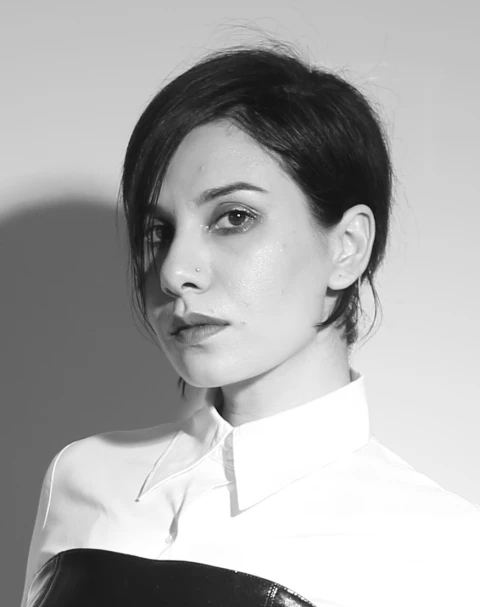
Rada Akbar is an Afghan artist whose work explores history and gender equality in Afghanistan through fashion, design, and visual art. She received the Prince Claus Seed Award in 2021, with support from the Ing Yoe Tan Fund, a legacy Fund named after the late Ing Yoe Tan, a member of parliament and supporter of women’s rights, who strongly believed in culture and diversity.
In this conversation with Pau Lian, Rada reflects on her journey in exile after the Taliban seized power in her home country and how Ing Yoe Tan’s legacy has changed her life forever.
Pau Lian Staal-Ong: Rada, you are a multidisciplinary artist from Afghanistan, one of the first Prince Claus Seed Awardees, and today you live and work in Paris. Could you tell us a little about your journey and how your artistic practice began?
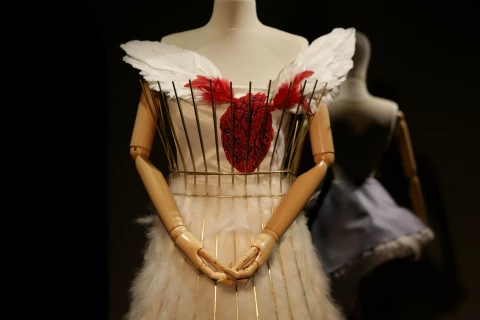
Rada Akbar: From the very beginning, the main focus of my work has been the situation of women. Back in Afghanistan, in 2018, I decided I wanted to be a full-time artist and focus on the history of women. That’s how I started my art project, "Abarzanan: Superwomen".
The idea was to change the narratives about the women of Afghanistan. To the rest of the world, we were only ever seen as victims, and I wanted to change that.
It was around the same time that the Americans started peace talks with the Taliban, and I could see how the women of Afghanistan were becoming even more victimised. They became invisible, they weren’t part of the negotiations anywhere. I think one reason was that for over twenty years, the whole world had only seen us as victims. That gave people a kind of sympathy for us, but they never saw us as warriors, or champions, as people who could say: this is not normal, you have to stand with us regardless.
In 2020, I started working on the Women’s History Museum project. I received space from the government to start it, and I continued Abarzanan alongside it, though I put more time into the museum. That continued until August 2021, when the collapse happened. I was evacuated by the French government to Paris, and I’ve been based here ever since.

PLSO: How did the evacuation happen? Was it because you were in an at-risk group?
RA: It was obvious at that time that anyone who was an active voice against the Taliban, was a target, especially artists. My work was public and loud: I spoke out regularly against the Taliban, against extremist religious groups, and how they suppressed people. From September 2020, the security situation got much worse; there were assassinations daily. Some days there were seven in a single day. We’d wake up in the morning and the first assassination would already have happened by seven o’clock. Most of the victims were women: journalists, activists, people who spoke against the Taliban or against the negotiation process. It got to the point that security officials told a group of us that they could no longer control the situation. Hundreds of people were told to leave Afghanistan immediately. I got an emergency visa from the Indian embassy and left with some other activists and friends.
I had never lived like that, even though I’d lived through war, conflict, displacement, and loss multiple times. Spending all my energy on staying alive felt, to me, like a kind of death. The first two days in India were extremely stressful. Then I started reflecting, asking myself what I actually wanted.
If I was going to keep living in that state, scared and only thinking about survival, what was the point of being alive? So after ten days I decided to go back to Afghanistan. I told myself I would prepare my exhibition. If I made it to opening night, I would; if I didn’t, I didn’t. At least I’d die in the middle of doing something I truly loved, something I’d put my heart into.
It was almost magic that I stayed alive. I lost friends to assassination, young people who’d studied abroad and come back to Afghanistan. One of them only lasted about eight months before a bomb was planted under her car. We’d check in with each other daily, half-joking about whose turn it might be. We’d say, if I die, don’t cry for me, just have a little party, dance, have a drink. Thinking back now, none of that was normal, but it was the life we were living, especially from September 2020 until the collapse. It was chaotic. I still can’t fully process what happened to us in those years, how much we lost, how many people we lost. When the collapse came, we lost everything overnight.


About two weeks before the collapse, I was asked to meet the French ambassador in Kabul. It followed an interview I’d done with AFP, where the journalist was so moved that she had to stop filming; she told me that after twenty years of reporting, it was the first time she’d cried during an interview. Without telling me, she contacted the embassy on my behalf, because I’d been desperately trying to find a way to get my artworks out of the country. The embassy called, arranged a meeting, and the ambassador ultimately offered me a visa and help getting my artwork out. That’s how my path to France began.
PLSO: What was it like to receive a Seed Award? You mentioned in an earlier conversation between us that it helped you a great deal with your move to Paris.
RA: It mattered a lot to be recognised by this award. Even before I left Kabul, I needed financial support to continue the Superwomen series and the museum project. When I was told I’d been selected for a Seed Award, it was just a few weeks before the collapse. I didn’t reply right away, given the situation, and I only told my siblings; it felt wrong to celebrate while everyone around me was losing everything.
When I arrived in Paris and the awards were publicly announced, it helped enormously. After such a huge loss, to receive that kind of recognition, financial and otherwise, felt, if not perfectly timed, at least meaningful: you arrive with nothing, in a devastating state, and someone tells you, even though you’ve lost everything, we still recognise you as an artist, and we’ll support you.
That was uplifting and motivating. I told myself I had to keep going, had to find a way to manage the stress and the toll on my mental health, had to get to a state where I could start creating new work again.
Pau Lian, I also want to hear about Ing Yoe Tan whose legacy supports the Seed Awards. Once you told me that Ing Yoe was passionate about protecting vulnerable people, especially women.
PLSO: Ing Yoe Tan was my aunt. We’re a half-Chinese family; she was fully Chinese, her parents having immigrated to the Netherlands. She was always a very independent woman, and I recognise some of her traits in you, Rada. She was extremely strong, deeply involved in supporting the development of women and girls, and very outspoken; she’d get fired up for causes she believed in, which is part of why she went into politics. She sat in the Dutch Senate for 12 years, with portfolios covering women’s equality and safety issues.

She was from my father’s generation. We lived close to each other, and she was my mentor. We saw a great deal of each other, and she was very involved in my children’s lives too. At one lunch, she told me about the Prince Claus Fund and said that when she died, she wanted to leave her inheritance to it, and asked if I’d sit on the board. I told her not to talk like that, that she wasn’t going to die, but of course I’d do it. Then Covid happened. She passed away unexpectedly. Afterward, we gathered the people she’d asked to be involved: someone from the other side of the family, and two friends, mostly from the culture sector. She’d been on the board of the Dutch Opera and Ballet fund, and heavily involved with small local theatres, places like Cosmic in Amsterdam, which promoted non-commercial work addressing political and social themes, equality, female empowerment.

The Prince Claus Fund had never managed a legacy like this before, so we had to find our own way of working together. Five years on, I think we’ve found something that works. We now have fifty-one Seed Award recipients, with one extra this year. It’s been an honour to do this in her name, and genuinely inspiring, seeing artists, women and men, address subjects from angles I’m not used to: photography, painting, dance, music, and especially community work, which mattered enormously to her. It doesn’t have to be a large project; it can be small. What matters is people trying to make an impact through their art, their stories, their images.
The financial support gives artists a push to keep going. Otherwise, people have to spend their time just surviving. Even the size of the Seed Award can be life-changing for some artists. What we get back from them, hearing what they plan to do with the support, and how grateful they are, is genuinely moving. You need that push. Without it, nothing happens.
RA: As an artist, I see how important that support is, both financial and in recognition, in equal measure, especially at the start of a career.
It’s like watering a small seed so it can grow strong. The beginning matters most, because once something takes root, it’s easier to keep it thriving on its own.
Once you’re established, you have more support and more opportunities, but at the start, it’s people trusting your work and your message that lets you grow, and everyone benefits from that eventually, the artist, society, the world.
I received that support at a genuinely difficult time, when I needed it, even though back home I’d already been established. Here, I was starting over. Life is going well now, in my work and my personal life, and with my mental health. I feel at home in Paris, and I have a lot of support from my partner. My family is doing well too, building new lives in different places.
PLSO: It’s interesting, what happens when you receive a Seed Award: you become part of a community, the Prince Claus Fund community. That’s something special about the Fund, and we need to bring more people into it, build more support behind it. I’m very grateful to have met you through this, Rada. Thank you.
Do you also believe culture is a powerful force? By including Prince Claus Fund in your will, you can help sustain a global network of artists and cultural changemakers. Whether through a gift in your will, a donation during your lifetime, or a Named Fund, we would be happy to explore the possibilities with you in a confidential, no-obligation conversation.